Custom Electronics Product Development, from Idea to Production
Xingwang Electronics is a custom electronics development and manufacturing partner based in Shenzhen, China.
You tell us what you want to build. We develop the electronics product and manage the manufacturing needed to bring it into production.
Product development starts earlier than PCBA: you may only have a product need or an idea — no design yet. Using China's mature electronics supply chain, we run the whole project for you — requirements, engineering approach, schematic & PCB design, components, manufacturing, testing, enclosure & mechanical structure, final assembly, packaging and delivery. Our product development team, with 10+ years of development experience, designs the board and tests the product; manufacturing runs through established manufacturing partners in China. The development is ours, and you get one accountable partner in English from first conversation to shipped product.
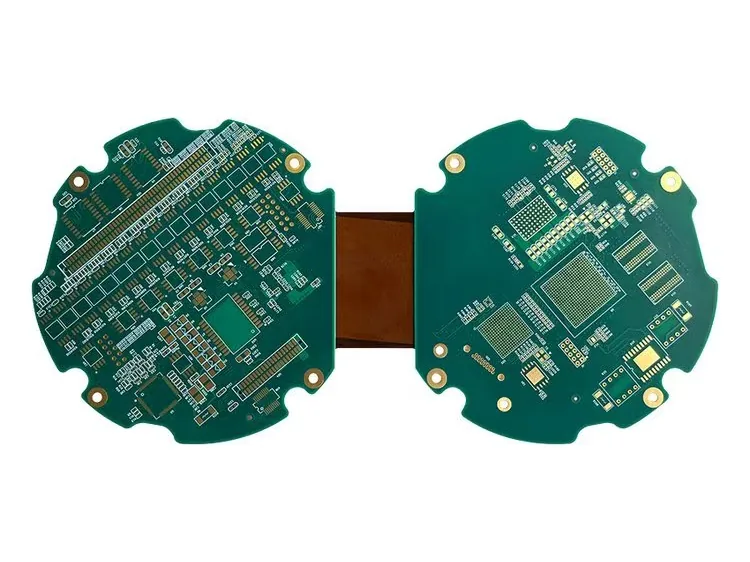
PCB fabrication
Our product development process
The complete chain — requirements → design → PCB → components → manufacturing → testing → enclosure & structure → final assembly → packaging → delivery, with each step either handled by our own team or run through the right manufacturing partner.
Scoping — we help you say clearly what the product must do, what it mustn’t, and what “done” looks like.
Design — schematic, layout and component selection, designed by our product development team.
Design-for-manufacturing review — catch problems before they cost you a production run.
Prototyping — build and test early versions, iterate.
Transition to manufacturing — we follow your product into small-batch or production PCBA.
Your idea stays yours — and you see it move — a rough idea or a requirement is enough to start, and it remains your project. You approve the engineering direction, design changes, the prototype and the move into production. Along the way you get regular project status updates, on a schedule we agree with you — what’s being worked on, what’s next, and anything that needs your decision — across design, prototype, testing, manufacturing and QC.
Use Scenarios — where development starts
Different products are used in different ways, and the way a product is used decides what it has to do. That is where development starts: a use scenario becomes product requirements, and the requirements decide the electronics, the board, the enclosure and the testing that follows.
Use scenario 01
Morse Code Learning
In Development
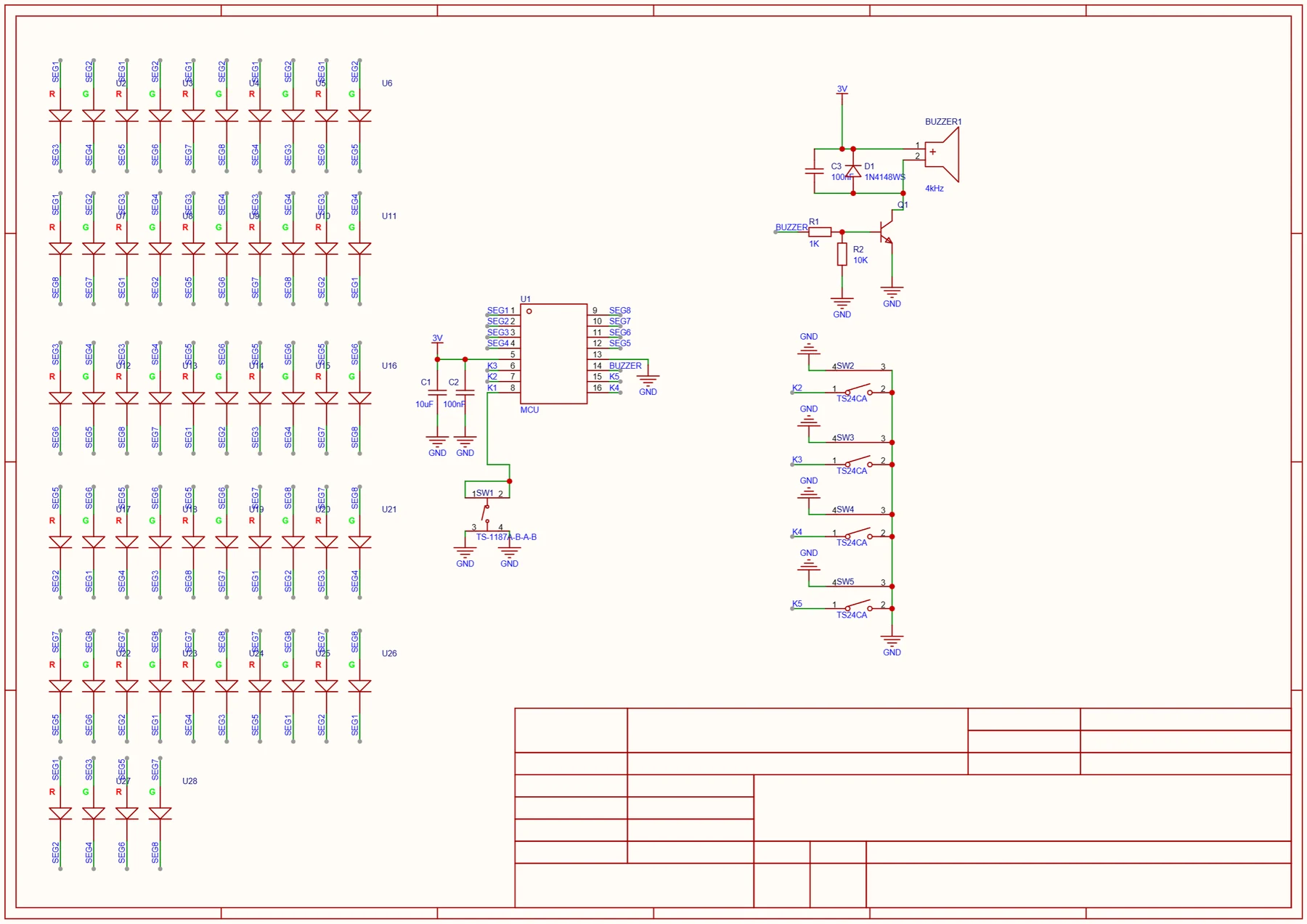
A device for learning and practising Morse code: the learner keys in a signal and the device answers immediately, so the rhythm can be corrected while it is still being learned.
Why the scenario matters
Learning Morse is a timing exercise, not a reading exercise. The learner has to hear or see whether a press was short enough to be a dot or long enough to be a dash, and that judgement is only useful if the answer comes back at the moment of the press — not after a pause, and not as a summary at the end.
Product requirements
Distinguish a short press from a long press reliably, in real time
Answer every input immediately, in two senses — light and sound
Stay usable for repeated practice, not a single demonstration
Design implications
Input handling — the press has to be timed and classified as it happens, so the timing logic sits at the front of the design rather than being added later.
Feedback drive — LED and buzzer have to be driven from the same event, so the output side is designed together, not as two separate features.
Electronics and PCB — the input and the two feedback paths are what the board is built around; that is the electronics design.
PCBA and a functional prototype — the result is assembled and brought up as a working unit, so the interaction can actually be tried rather than described.
Use scenario 02
Rechargeable Decorative Lighting
Completed
A small rechargeable light for room decoration, in a 45 mm round base, switched between two brightness levels by tapping it.
Why the scenario matters
This is a product used in the dark, close at hand, and left somewhere for weeks. That combination sets the constraints: it cannot depend on a switch you have to find, it cannot depend on a disposable battery, and it has to be small enough and light enough to sit where the customer wants it rather than where a cable reaches.
Product requirements
Rechargeable operation over USB-C, so the product does not depend on replaceable cells
Two useful brightness levels, reachable without hunting for a switch
A form factor small enough to sit on a surface — a 45 mm round base
Runtime long enough between charges to be left alone
Design implications
Charging and power path — a 3.7 V cell charged over USB-C at 5 V input, which is the power side of the design.
LED selection and drive — four LEDs with two output levels, cycled by tap, which is where the interaction and the light output meet.
Compact round PCB — the board follows the enclosure instead of the other way round: the 45 mm round format is what the electronics have to fit.
Enclosure and structure — a PP housing with a matte finish, carrying the board, the cell and the charging port.
Testing and aging — functionally tested as a working unit, then run continuously to screen out early failures before the product ships.
How we develop and bring products into production
Electronic product development starts before a design exists. It starts with what you want to build — a product idea or a market need — which becomes a use scenario, and the use scenario becomes the requirement. Requirements definition and solution development follow, then electronic product design: schematic, PCB layout, component selection, and the enclosure and mechanical structure around the board. Hardware product development then carries the project through a prototype or sample, functional testing and validation, and sample approval — and only then into small-batch and mass production, final testing and aging, acceptance, packaging and delivery.
01
Customer Idea
Our team
It starts with what you want to build — a product idea, a market need, or a problem that has not been solved yet. Nothing is fixed at this stage, and nothing needs to be.
02
Use Scenario
Our team
We start from how the product will actually be used, not from a parts list. The scenario decides what the product has to do, and everything downstream inherits from it.
03
Requirements Definition
Our team
The scenario becomes a specification: what the product must do, what it must not, and what "done" looks like. This is the document the rest of the project is measured against.
04
Solution Definition
Our team
Turning the requirement into an engineering approach — the architecture, the blocks and the trade-offs, before any board exists.
05
Electronics / Product Development
Our team
The product takes shape: electronics design, form factor, and the enclosure and mechanical structure around the board.
Electronics designEnclosure & mechanical
06
PCB Design
Our team
Schematic capture, layout and component selection, with a design-for-manufacturing review before release.
We build and validate the prototype: a working sample is built so the design can be held, powered and used, and our product development team drives the prototype and the iteration that follows. Fabrication work for it — PCB fabrication and PCBA — is carried out by the manufacturing partner for the project.
Prototype board — bring-up on the benchReal evidenceMorse Code Learning Device
08
Functional Testing & Validation
Our team
The board is powered up and exercised as a working unit — it has to do what the requirement says, not just pass inspection. This is the development-phase test used to determine whether the sample is ready for approval or further iteration.
The prototype running — Morse tree illuminatedReal evidenceMorse Code Learning Device
09
Sample Approval
Our team
The sample is presented with its test results, and you approve it — or it goes back for another iteration. Production does not start until this gate is passed.
10
Small-Batch Production
Manufacturing partners
The approved design goes into a first production run at the quantity you need to test the market or fill an initial order. Manufacturing runs through established manufacturing partners in China; we coordinate it.
After production, finished units are functionally tested and run continuously for an extended period, to screen out intermittent joints and early component failures before a product reaches a customer.
Functional testBurn-in
13
Acceptance
Our team
The production batch is checked against the approved sample and the agreed specification before it is accepted.
14
Packaging
Our team
Units are packed for the journey — protection, labelling and the presentation your customer will see.
15
Delivery
Our team
Delivery is arranged and tracked to the destination you agreed, with one point of contact if anything moves.
Real Project Evidence
Where we can, we use real evidence from a real project — a photo, a screenshot or a video frame from the actual work, never a stock image. We also keep our own work and the manufacturing partner's work clearly separate: a photograph of a partner's facility or equipment is never presented as our own.
Our electronics development services cover the whole span — from a first idea or requirement, through engineering and prototyping, into manufacturing.
Electronic product prototyping is the stage most projects underestimate: early boards you can hold and test, while a change is still cheap to make. Electronics product development and manufacturing then run as one continuous project rather than two separate handoffs, so the engineering carries through to what actually gets built.
For a worked example of electronics product development end to end, see the Tap Light project — a product we developed, covering the board, the enclosure, the two brightness levels and the testing that followed.
How it works
Tell us where you are — an idea, a sketch, a working prototype, or an existing design
We scope it with you and agree the engineering approach
Design / review / iterate to a manufacturable version
Prototype and test
Small-batch or production, with QC and delivery
What to send us
Don’t have everything? Send what you have — we’ll tell you what’s missing.
What you send stays yours — and sending it doesn’t commit you to anything. After we review, the next step is your call.
Yes — our product development team handles the design work: requirements, solution development, schematic and PCB design, and the testing that follows. Manufacturing runs through established manufacturing partners in China, and our own team stays on the project from first conversation to shipped product.
Can we outsource part of our electronics development to you?
Yes — many teams keep the product definition and the customer-facing side in house, and outsource electronics development to us: solution definition, schematic and PCB design, prototyping, and the testing and validation that follows. You can hand over the whole development, or only the part you don't have capacity for.
Do you work as an OEM or ODM electronics partner?
Yes. Teams come to us for OEM electronics manufacturing when they already have a design or a specification and want the product built to it under their own brand. They come to us for ODM electronics manufacturing when they have a requirement and no design yet — our product development team develops the product, and it ships under their brand. In both cases the engineering, testing and QC are ours, and manufacturing runs through established manufacturing partners in China.
I only have an idea — is that enough to start?
Yes. Part of the job is helping you turn a rough idea into something concrete. Start the conversation and we'll help you scope it.
Can you take a design that already exists into production?
Yes — that's our PCBA service (see PCBA). We also review existing designs for manufacturability.